
Ask Linda
How the Spring Thaw Heats Up the Housing Market
Learn May 4, 2026 9 min read

Why Spring Weather Is the Biggest Driver of Housing Market Activity
How spring weather affects buyer activity is one of the most consistent and well-documented patterns in real estate. Every year, as temperatures rise and days grow longer, the housing market shifts into a noticeably higher gear — and April 2026 is no different.
Here is a quick look at what the data tells us:
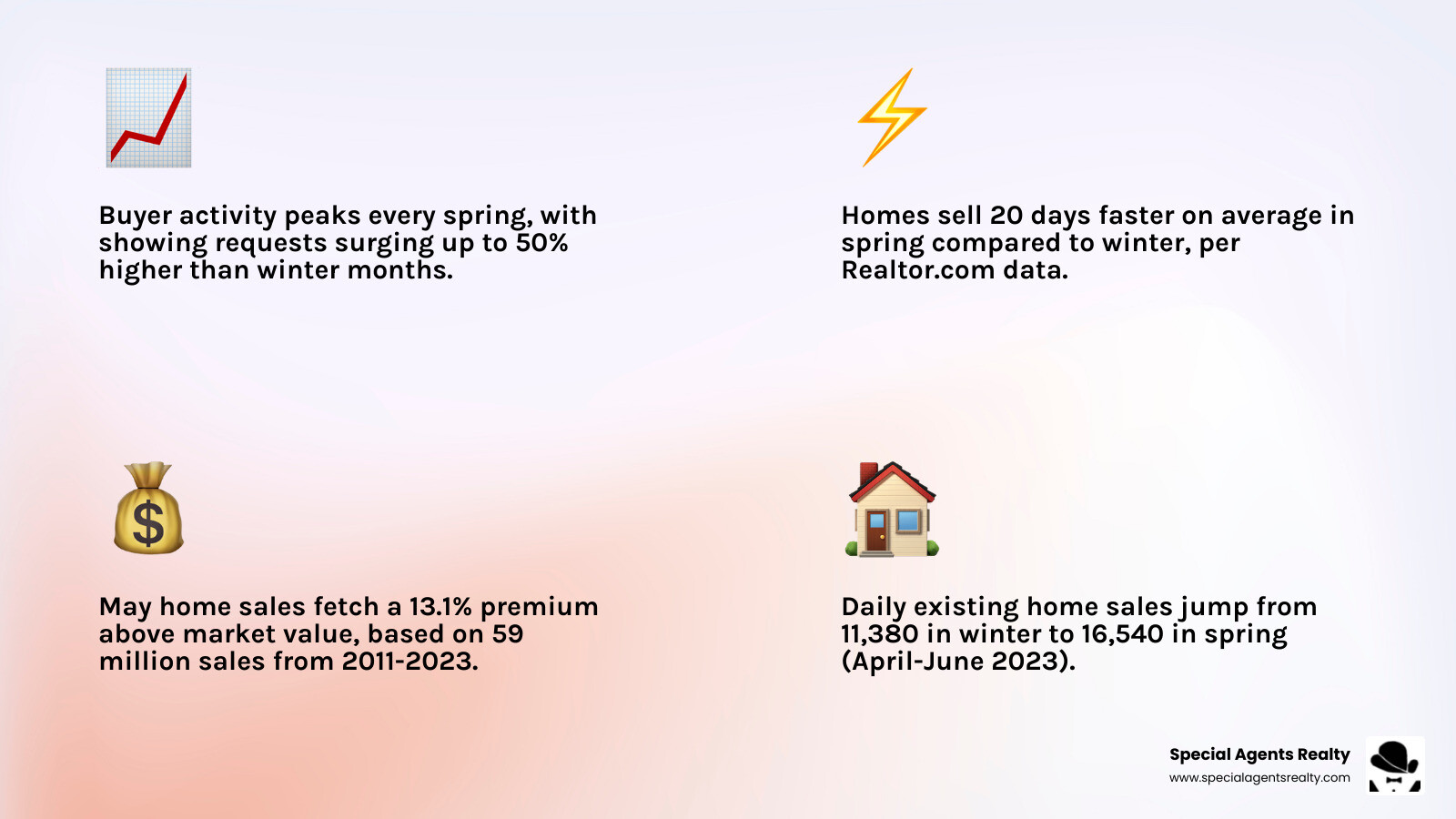
- More buyers show up: ShowingTime data confirms that buyer activity peaks every spring without fail
- Homes sell faster: According to Realtor.com research, homes sell an average of 20 days faster in spring compared to winter
- Sellers get more offers: NAR's Realtors Confidence Index shows sellers consistently receive more offers during spring than any other season
- Prices climb: Homes sold in May have historically fetched an average premium of 13.1% above market value, based on an analysis of 59 million home sales from 2011 to 2023
- Buyers feel optimistic: Research shows that 90% of people report improved mood after spring weather exposure, and 69% say warmer weather makes them more social — both factors that drive people to explore homes
The numbers are striking. During peak season (April through June 2023), an average of 16,540 existing homes sold daily across the U.S. During the slower winter months (December 2023 through February 2024), that figure dropped to just 11,380. That is a difference of more than 5,000 homes per day.
Spring does not just nudge the market — it transforms it. Blooming gardens make homes look their best. Longer evenings let buyers schedule after-work showings. Warmer moods lead to faster, more confident decisions. And families looking to move before the next school year create a sense of urgency that compresses timelines and intensifies competition.
Whether you are buying or selling this season, understanding what drives this annual surge puts you in a much stronger position to act strategically.
Why Spring Weather Leads to Increased Buyer Activity
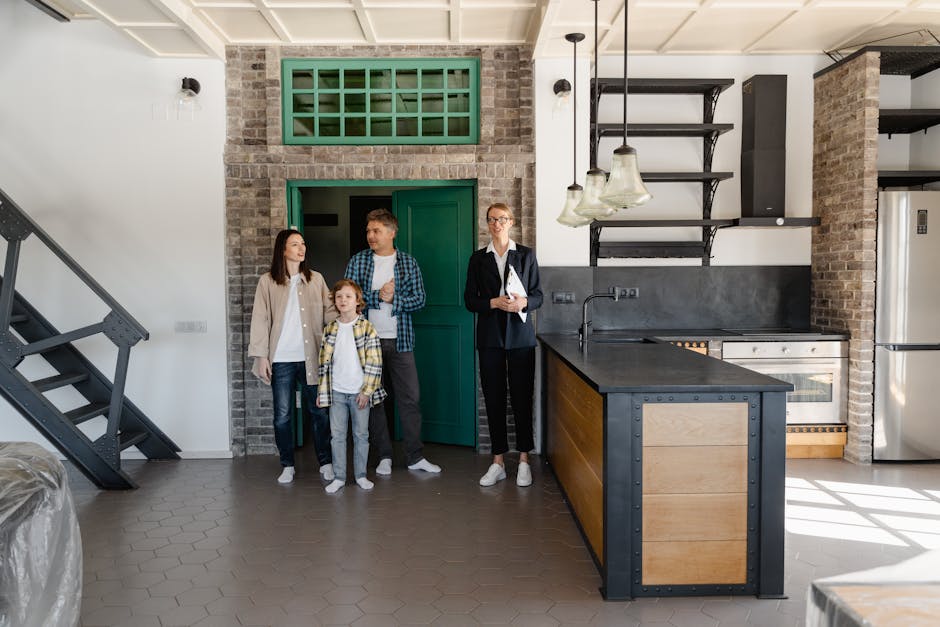
As we move through April 2026, we are seeing the familiar "Spring Effect" take hold across the Puget Sound region. But why exactly does a change in the forecast lead to a frenzy in the foyer? At Special Agents Realty, we’ve observed that it’s a perfect storm of environmental, social, and practical factors.
Warmer temperatures act as a natural invitation for people to leave their winter "hibernation." When the sun finally breaks through the clouds in Seattle or Kirkland, people are 69% more likely to be social and 45% more likely to experiment with new experiences—like visiting an open house in a neighborhood they’ve never considered. This surge in social energy directly translates to increased foot traffic at our listings.
Timing is also a major driver. Many buyers are parents who want to be settled into a new home before the next school year begins. By starting their search in April or May, they allow enough time for a 30-to-60-day closing and a summer move. If you are wondering, Is It a Good Time to Buy a Home in Seattle, the answer often depends on your tolerance for competition versus your need for inventory.
Furthermore, the psychological shift is undeniable. Data shows that 61% of consumers feel more optimistic and energetic when spring weather is in the forecast. In the real estate world, an optimistic buyer is a decisive buyer. When people feel good, they are more likely to make emotional connections to a property, envisioning summer BBQs on the deck rather than worrying about winter heating bills. To see how this activity is trending in your specific area, you can check our Market Report All Counties.
How spring weather affects buyer activity through curb appeal
First impressions are everything, and spring is the one season where the "packaging" of a home improves all on its own. How spring weather affects buyer activity is most visible in the lush greenery and blooming gardens that characterize the Northwest this time of year.
About 58% of consumers plan to garden or do yard work as soon as the spring forecast arrives. For sellers, this means their properties naturally look more vibrant, well-cared-for, and inviting. A home with a manicured lawn and blooming rhododendrons carries a higher perceived value than the same home framed by gray skies and dormant brown grass.
We always emphasize that Seattle Real Estate Maintains Its Value through various cycles, but spring is when that value is most easily showcased. Professional photography taken on a clear spring day can make a listing pop, attracting more online clicks and, ultimately, more physical showings.
The psychological impact of sunny days on home showings
There is a direct correlation between a clear sky and a crowded open house. Sunny days reduce stress—90% of people report a better mood after exposure to spring weather—and this mental clarity helps buyers navigate the often-stressful process of property hunting.
When the sun is out, buyers are more likely to engage in spontaneous viewings. They might be out for a walk in Bothell or Marysville, see a "For Sale" sign, and decide to pop in. This serendipity is much less common during the dark, rainy winter months. Historical data, such as the Seattle Real Estate Market News Release Nov 5 2015, shows that while the market has its ups and downs, the seasonal "reawakening" remains a constant force in buyer psychology.
Navigating April Showers and Property Evaluations
While we all love the sun, the famous "April showers" of the Pacific Northwest play a crucial role in property evaluations. In fact, a rainy day can be a buyer's best friend. While fair weather brings the crowds, rainy weather reveals the truth about a home’s "envelope."
When we take clients through homes during a downpour, we aren't just looking at the kitchen finishes; we are looking at how the house handles water. This is the best time to check for:
- Gutter performance: Are they overflowing or draining properly away from the foundation?
- Roof integrity: Are there any active leaks or damp spots in the attic?
- Basement and crawlspace moisture: Is the sump pump working? Is there standing water?
Understanding Hot Normal and Cold Markets is important, but understanding a home's drainage is vital. A rainy spring day provides a "real-world" stress test that a dry summer day simply cannot replicate.
How spring weather affects buyer activity during home inspections
Spring is the busiest season for home inspectors. Because the snow has melted and the ground isn't yet bone-dry, inspectors have excellent access to the exterior of the home. They can easily inspect the foundation for cracks that might be hidden by snow in winter or obscured by overgrown vegetation in late summer.
However, because this is peak season, scheduling can be a challenge. Top-tier inspectors in the Puget Sound area often book out weeks in advance. For buyers, this means you need to be prepared to act quickly and have your "team" ready to go. Even in unique niches like the June 2023 Seattle Houseboat Market, the spring weather allows for more thorough exterior and "below-the-waterline" assessments that are much more difficult in the dead of winter.
Assessing outdoor living spaces in the Northwestern spring
In places like Bremerton and Puget Sound, outdoor living is a way of life. Spring is the time when buyers can truly evaluate the potential of a property’s deck, patio, or waterfront access.
If you are asking, Is It a Good Time to Buy Waterfront Homes in Seattle, spring offers the best opportunity to see the water levels and the condition of docks or bulkheads after the winter storms have passed. Sellers often use this time to "stage" their outdoor areas with furniture and lighting, helping buyers visualize their own summer evenings. It’s also the ideal time to check the functionality of drainage systems in the yard to ensure your summer garden won't turn into a winter swamp.
Strategies for Success in a High-Activity Market
The spring market is fast, and if you aren't prepared, it can be overwhelming. To succeed, you need to understand the metrics.
| Metric | Spring Market (April-June) | Winter Market (Dec-Feb) |
|---|---|---|
| Avg. Daily Sales | ~16,540 | ~11,380 |
| Days on Market | 20 days faster (avg) | Slower pace |
| Sale-to-List Ratio | Often > 100% | Closer to 97-99% |
| Buyer Competition | High (Multiple Offers) | Low to Moderate |
To navigate this, we recommend three core strategies:
- Get Pre-Approved Early: In a market where homes sell 20 days faster than usual, you don't have time to call the bank after you find the perfect house.
- Be Ready for Bidding Wars: With sellers getting more offers on average, your first offer needs to be your best or most strategic one.
- Look Past the "Spring Polish": Don't let the blooming flowers distract you from the home's bones. Use the weather to your advantage to check for those rainy-day issues we mentioned earlier.
How spring weather affects buyer activity and competition levels
The momentum of the spring market is a double-edged sword. For sellers, it’s a "golden opportunity" to capitalize on high demand and potentially see multiple offers. For buyers, it means you are often competing with dozens of others who have also been "activated" by the warmer weather.
Inventory usually peaks in the spring, which is great because you have more choices. However, the sheer volume of buyers means that even with more homes on the market, the competition remains fierce. This is why we see a surge in "Hot Markets" during this window. You can learn more about these dynamics in our guide to Hot Normal and Cold Markets.
Frequently Asked Questions about Spring Real Estate
Why is May considered the most profitable month to sell?
Data from ATTOM, analyzing 59 million home sales over a decade, shows that homes sold in May fetch a 13.1% premium. This is because May represents the "sweet spot" where buyer demand is at its peak, curb appeal is at its most beautiful, and the urgency to move before the new school year is hitting its stride.
How do longer daylight hours help buyers?
Longer days are a logistical blessing. In the winter, it’s dark by 4:30 PM in Seattle, making it nearly impossible to see a home’s exterior or neighborhood after work. In the spring, daylight lasts well into the evening, allowing for more flexible scheduling and the ability to truly see the property and the surrounding community in natural light.
What are the downsides of buying during the spring surge?
The primary downsides are increased competition and higher prices. Because it is the most popular time to buy, you may find yourself in a bidding war, which can lead to "buyer fatigue." Additionally, because homes sell so quickly, you have less time to deliberate on a decision compared to the slower winter months.
Conclusion
At Special Agents Realty, we know that how spring weather affects buyer activity is more than just a trend—it's a fundamental shift in the real estate landscape. Whether you are looking for a home in Seattle, Kirkland, Marysville, or anywhere across the Puget Sound, the spring thaw brings both incredible opportunities and unique challenges.
Our team is dedicated to providing the personal care and expert guidance you need to navigate this high-energy season. We pride ourselves on making the process as stress-free as possible, ensuring that your real estate journey is not just successful, but memorable. From understanding seasonal drainage to winning a competitive bidding war, we are here to help you every step of the way.
Ready to make your move this spring? Explore our Special Agents Realty Services to see how we can help you heat up your home search or sale today.

Written by
Owner | Designated Broker, Special Agents Realty · Owner / Designated Broker License #17584
25+ years in Puget Sound real estate, lived aboard a floating-on-water residence for nearly 15 years, and founding advocate of the Lake Union Liveaboard Association.