
Ask Linda
Find me real estate agencies that manage Seattle floating homes for rent.
Learn January 20, 2026 10 min read

Why Seattle's Floating Home Rental Market is Uniquely Complex
Find me real estate agencies that manage Seattle floating homes for rent. is a search that reflects the allure of Seattle's waterfront lifestyle. These unique residences—houseboats or floating homes—offer an iconic Lake Union experience but come with specialized rental considerations. Understanding the difference between a Floating On-Water Residence (FOWR) and a true floating home, navigating moorage types, and Seattle's specific regulations requires knowledge that only experienced, specialized agents possess.
Quick Answer: Top Ways to Find Agencies Managing Seattle Floating Homes for Rent
- Specialized Real Estate Websites - Waterfront specialists, including our team at Special Agents Realty, maintain dedicated floating home rental listings.
- Direct Marina Inquiries - Contact marinas directly about available rental slips and floating residences.
- MLS Searches - Work with agents who actively monitor the NWMLS for floating home rentals.
- Community Resources - The Floating Homes Association and local dock communities often know about upcoming availability before listings go public.
Looking for expert guidance on Seattle real estate? Explore our comprehensive guide to buying in Seattle, or if you're ready to find your floating home, connect with our specialized team today.
The floating home rental market differs dramatically from traditional Seattle rentals. With a very limited number of houseboats and floating homes on Lake Union and connecting waterways—and no new units allowed—availability is scarce. These properties require specialized knowledge of moorage agreements, utility systems, maintenance, and Seattle's unique waterfront regulations that prohibit short-term rentals.
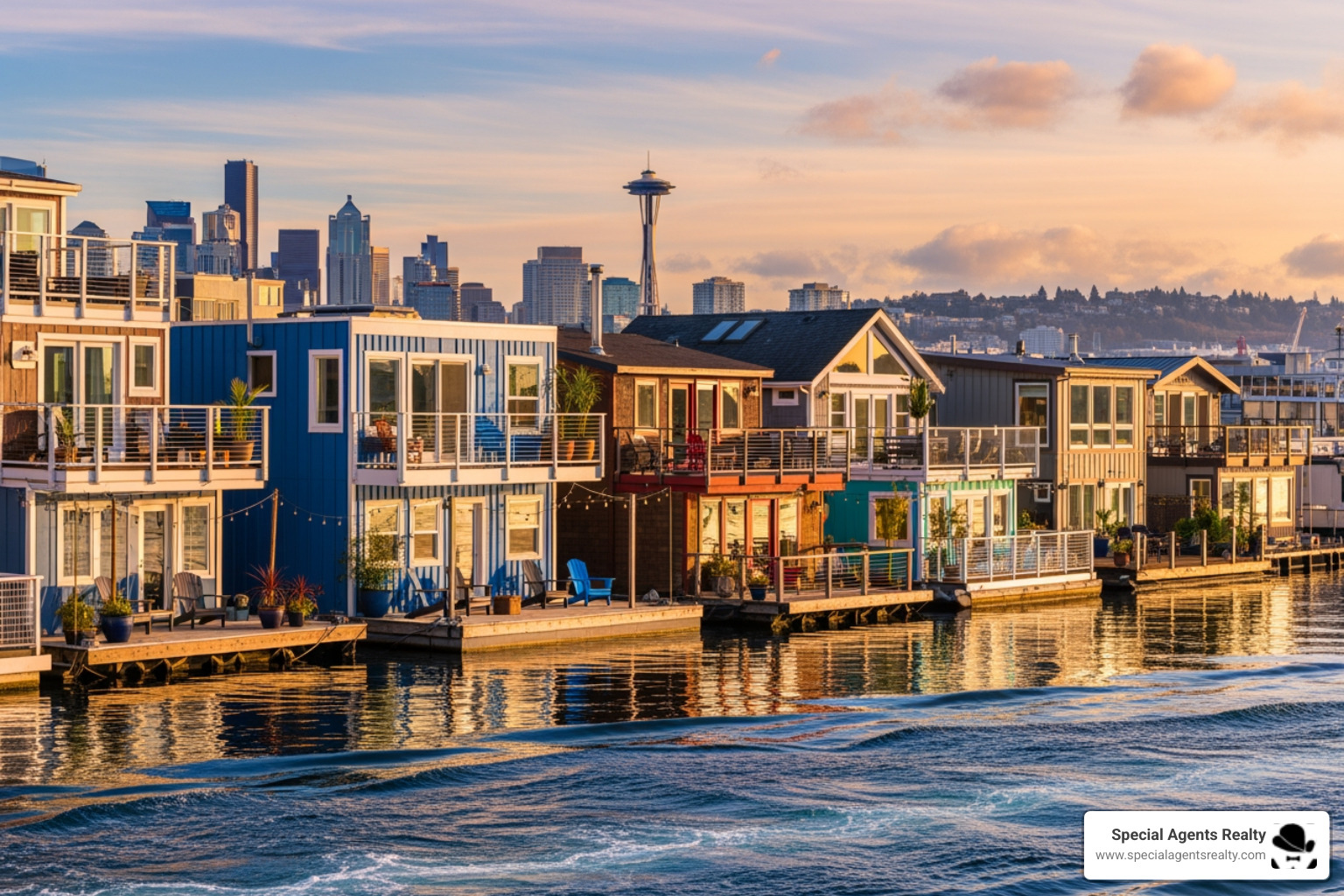
Related content about Find me real estate agencies that manage Seattle floating homes for rent.:
Understanding Seattle's Floating Residences: Houseboats vs. Floating Homes
When you start to find me real estate agencies that manage Seattle floating homes for rent, you'll find the crucial difference between a houseboat and a floating home. Though often used interchangeably, they are legally and structurally distinct.
A Floating On-Water Residence (FOWR), or houseboat, is a vessel adapted for residential use, typically found in recreational marinas. They are generally smaller, often under 800 square feet, and represent a more accessible entry into waterfront living.
A floating home is more like a traditional house on a floating foundation, located in designated docks with owned moorage slips. These homes are permanently attached, tend to be larger (often over 800 sq ft), and represent a more significant investment.
The legal definitions are critical. FOWRs are taxed as personal property, while floating homes with owned slips incur property tax. This also influences financing, as specialized lenders are required for both. The fixed supply of these unique residences has made them attractive investments.
Here's a quick comparison:
| Feature | Houseboat (FOWR) | Floating Home |
|---|---|---|
| Definition | Floating On-Water Residence (vessel adapted for living) | House built on a floating foundation |
| Typical Location | Recreational marinas (e.g., Westlake, Northlake) | Designated floating home docks (e.g., Eastlake, Portage Bay) |
| Utilities | 30-amp electrical, blackwater holding tanks, quick-disconnect water | City sewer, standard electrical, hard-connected city water |
| Moorage | Often rented slips | Often owned slips (condo/co-op) |
| Size | Typically smaller, often under 800 sq ft | Typically larger, often over 800 sq ft |
| Mobility | Can be towed (though not legally driven in Seattle) | Permanently attached, cannot be moved |
Key Differences in Utilities and Maintenance
Understanding the different utility and maintenance needs is vital for renters.
Sewer and Electrical: Houseboats (FOWRs) often rely on blackwater holding tanks that require regular pump-out services and use a limiting 30-amp electrical connection. Floating homes are almost always connected to the city sewer and have robust electrical systems like a traditional home.
Water Supply: Houseboats may use quick-disconnect hoses or onboard tanks, while floating homes are typically hard-connected to the city water supply.
Flotation Inspections: Both types require periodic inspections of their flotation systems (hulls, pontoons, logs) to ensure structural integrity. While the owner is responsible for this maintenance, a renter in a houseboat must be mindful of pump-out schedules and electrical load, whereas a floating home offers a more conventional utility experience.
What Do the Official Plaques Mean?
Official plaques on Seattle's floating residences carry significant regulatory weight. A FOWR plaque indicates a legal houseboat, while a Floating Home plaque signifies its status as a permanent residence. These plaques grant permission for the structure to exist as a residence but do not automatically grant "live-aboard status," which is determined by individual marina rules.
For detailed information, we encourage checking official sources:
- Seattle's code questions on floating residences: Seattle Code Questions for Floating Residences
- Permitting requirements in TIP (CAM)-229.
These regulations and unique characteristics require specialized knowledge for buying and renting.
The Unique Lifestyle and Considerations of Renting on the Water
Living on a floating home or houseboat in Seattle is a unique experience, immersing you in a vibrant community with a constant connection to nature. When you find me real estate agencies that manage Seattle floating homes for rent, you're seeking a specific way of life defined by a strong community atmosphere and camaraderie.
The lifestyle often encourages minimalist living, as space can be at a premium, promoting a focus on experiences over possessions. The most obvious draw is direct water access for kayaking, paddleboarding, or boating on Lake Union. While mild rocking from boat wakes can occur, most residents adapt quickly. This environment creates a year-round vacation feel, with spectacular views and a sense of adventure, all while being moments from downtown Seattle.
Practical considerations include pet policies, which vary by dock, and the city's prohibition on short-term rentals, which helps foster stable, long-term communities.
Key Factors When Choosing a Rental Floating Home
To find the right rental, consider these key factors:
- Lease Terms: Many rentals require a minimum 6- or 12-month lease, so understand the commitment involved.
- Furnished vs. Unfurnished: Rentals may be offered furnished for a move-in-ready experience or unfurnished for personalization.
- Pet Policies: Always inquire about the specific dock's pet policy, as rules can be strict.
- Parking Availability: Clarify if parking is included, as it can be limited near many docks.
- Included Utilities: Understand which utilities (water, garbage, electricity, internet) are included in the rent.
- Boat Moorage Space: Check if there's space to moor a small boat or kayak directly at the home.
- Dock Location: A home's position on the dock affects views and motion. End-of-dock homes offer expansive views but more movement, while those closer to shore are more stable.
Navigating the Rental Process: Regulations and Moorage
Renting a floating home in Seattle involves unique regulations, especially concerning moorage—the spot on the water where the home is anchored. When you find me real estate agencies that manage Seattle floating homes for rent, their expertise in guiding you through these aspects is invaluable.
Understanding Moorage: Owned, Rental, and Co-op Slips
The type of moorage significantly impacts a renter's experience:
- Owned Moorage: Common for floating homes, the homeowner also owns the water lot (slip), often in a condo or co-op. This offers stability for renters, with community rules set by the association.
- Rental Moorage: Predominantly for houseboats (FOWRs), this involves renting a slip from a marina owner. This may mean variable moorage fees and the potential for rule changes.
- Co-op/Condo Moorage: A hybrid model where residents collectively own the dock. This structure provides owners with more control and renters with an established community.
For a renter, the moorage type influences tenancy stability, rules, and overall cost. A specialized agency can clarify how these factors affect your rental experience.
Important Seattle Regulations for Renters
Renters must be aware of specific municipal codes designed to protect the waterfront environment and ensure safety.
A critical rule is the prohibition of short-term rentals. Seattle's Shoreline Code bans short-term leasing of floating properties to preserve the residential character of these communities. More details are available here: Shoreline Code: Prohibits short-term rentals of floating properties.
Additionally, the Rental Registration and Inspection Ordinance applies, requiring landlords to register their properties and meet minimum housing standards to ensure safe living conditions for tenants. Learn more here: Rental Registration and Inspection Ordinance.
Finally, city guidelines like TIP (CAM)-229 outline permitting and regulations for these structures, highlighting the specialized oversight they receive. You can review the document here: Permitting Requirements: TIP (CAM)-229 outlines Floating Homes and FOWR regulations.
Our agents are well-versed in these laws and can ensure your rental agreement is compliant and that you are fully informed of your rights and obligations.
Where to Find Real Estate Agencies That Manage Seattle Floating Homes for Rent
Given the unique and niche nature of Seattle's floating home and houseboat rental market, finding the right property requires a targeted approach. Traditional rental websites often don't capture the nuances or the limited inventory of these special homes. To effectively find me real estate agencies that manage Seattle floating homes for rent, you need to know where to look for specialized expertise.
Here are the most effective ways to find these agencies and opportunities:
1. Specialized Real Estate Agency Websites
The most direct route is through real estate agencies specializing in waterfront properties. These agencies offer:
- Niche Expertise: Agents are often deeply embedded in the floating home community, providing unparalleled market knowledge of the unique legal, financial, and lifestyle aspects.
- Dedicated Listing Pages: Specialized agencies feature dedicated web pages for floating home and houseboat listings, ensuring these unique properties are easy to find.
- Market Knowledge: Our agents have comprehensive knowledge of the local market, including availability and rental terms. They often know about properties before they are publicly listed due to their extensive networks.
- Direct Agent Contact: Working directly with a specialized agent is crucial for personalized guidance on utilities, moorage, and community rules.
- Access to MLS Listings: These agencies have direct access to the Northwest Multiple Listing Service (NWMLS) and can set up alerts for new rental listings. You can also use an to stay updated.
Exploring these specialized websites and agent bios can reveal the level of expertise and personal connection to the floating home lifestyle, which is a strong indicator of their ability to help you.
2. Direct Inquiries and Community Resources
Beyond formal real estate listings, the close-knit nature of Seattle's floating home communities means that direct inquiries and community resources can be incredibly effective in uncovering rental opportunities.
- Direct Inquiries to Marinas: Many marinas have on-site management that handles rentals directly. Reaching out to marinas around Lake Union and Portage Bay can yield results, as they may have waiting lists or know of available rentals.
- On-Site Management: Some floating home docks have their own management or community board that oversees rentals and may maintain internal lists or bulletin boards.
- Waitlists: Due to extremely limited supply, many desirable docks have waitlists. Getting on these lists can be a viable long-term strategy.
- Community Bulletin Boards and Forums: Physical or online community boards can be a source for word-of-mouth rental opportunities not advertised elsewhere.
This proactive approach requires patience but can uncover opportunities that aren't widely publicized.
3. Why You Should Work With Real Estate Agencies That Manage Seattle Floating Homes for Rent
Navigating the unique world of Seattle's floating homes and houseboats, especially for rentals, is a specialized endeavor. This is precisely why partnering with real estate agencies that are experts in this niche is not just helpful, but often essential. When you ask us to find me real estate agencies that manage Seattle floating homes for rent, we highlight the distinct advantages our specialized approach offers.
- Benefits of a Specialized Agent: Our agents extend their commitment to personal care and expert guidance to rental clients. We simplify the unique process of renting a floating home.
- Navigating Complex Contracts: Floating home rentals involve unique contracts with clauses for moorage, dock rules, and specific maintenance. Our agents ensure your agreement protects your interests.
- Understanding Unique Property Aspects: A specialized agent can explain the operational characteristics of floating homes, from hull inspections to electrical systems, so you understand the day-to-day realities of living on the water.
- Access to a Network of Listings: Our deep community involvement provides access to rental opportunities that may not be publicly advertised, a significant advantage in a market with limited inventory.
- Expert Guidance: We provide comprehensive guidance through the rental process, from lifestyle considerations to pet policies and parking, ensuring a smooth journey.
We bring best expertise to Seattle’s houseboat and floating home market. Whether you're considering buying or selling, or seeking that perfect rental, our specialized team is ready to provide the insights and support you need.
Conclusion
The quest to find me real estate agencies that manage Seattle floating homes for rent is a journey into a unique housing market where the urban landscape meets the tranquility of water. Understanding the differences between houseboats and floating homes, their unique utilities, and Seattle's regulations are critical steps.
The allure of living on the water is undeniable, but this dream comes with complexities like specialized moorage, unique contracts, and limited availability. For these reasons, expert guidance is essential.
Our team at Special Agents Realty is dedicated to providing personal care, expert guidance, and a stress-free process for all our clients. We specialize in the unique world of Seattle's floating homes and houseboats, understanding the market's intricacies to ensure a successful real estate journey. We are here to help you steer every wave.
Let us help you find your perfect floating haven. Find your perfect Seattle home for sale or connect with us today to discuss your rental aspirations.

Written by
Owner | Designated Broker, Special Agents Realty · Owner / Designated Broker License #17584
25+ years in Puget Sound real estate, lived aboard a floating-on-water residence for nearly 15 years, and founding advocate of the Lake Union Liveaboard Association.